PPLI changes the tax and adds tradeoffs
PPLI is the perfect asset - if you are looking at tax consequences. Life insurance is the only asset that can make the following claims: it grows tax-free, pays out tax-free at death, provides a basis step-up (effectively) and can be structured outside of the taxable estate. If you can overcome its complexity and illiquidity, PPLI may be a perfect asset for you.
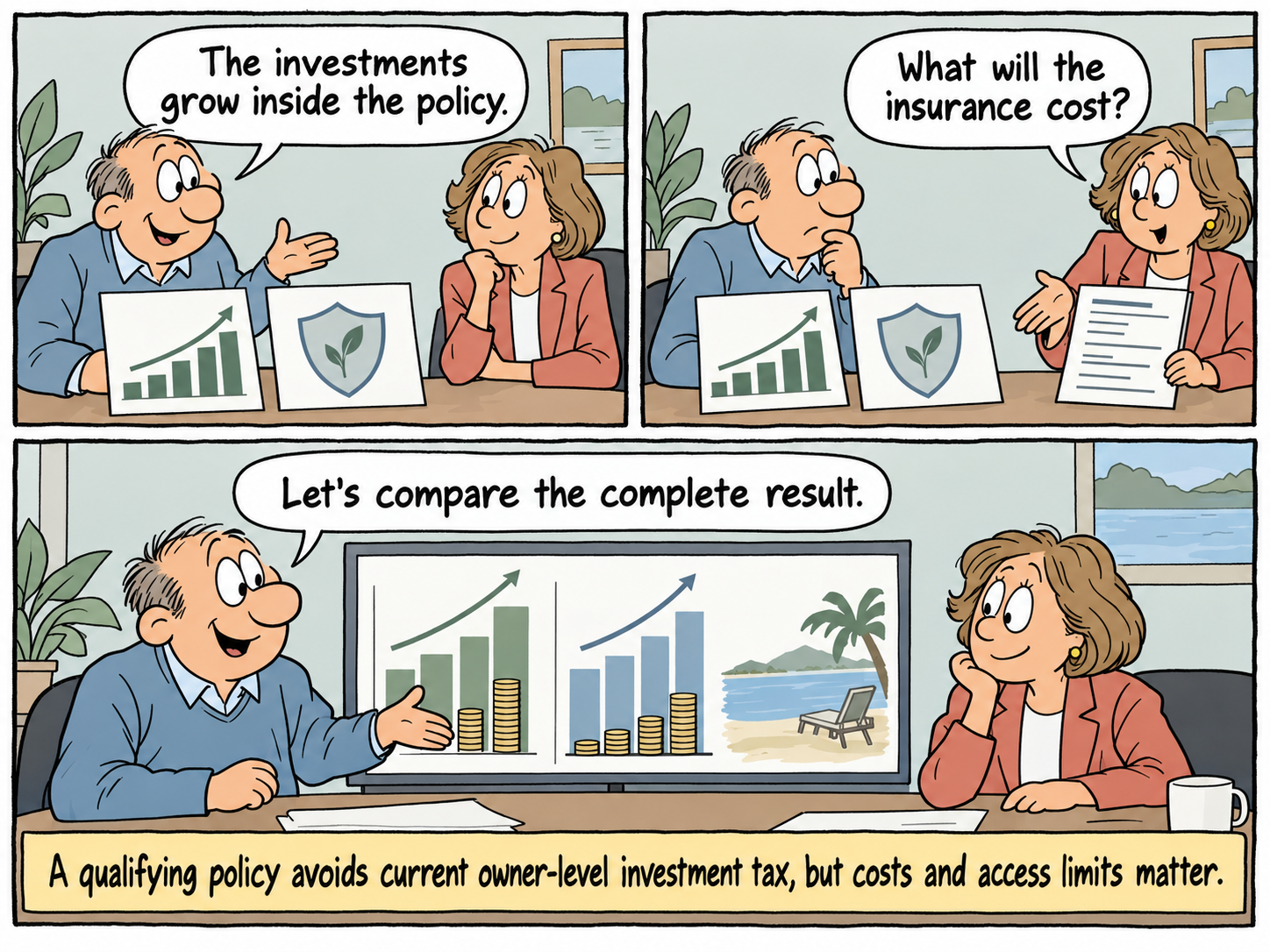
PPLI is basically a variable life insurance policy designed with the life insurance component as small, and the investment component as large and flexible, as the insurance rules permit. The investments inside the policy can earn income and realize gains without current tax to the policyholder.
Assume a family invests $1 million for thirty years in a trust outside the estate, earning 7.2% annually after costs but before tax. The investment roughly doubles every ten years. Assume a 30% tax on realized gains.
If the taxable portfolio earns its return entirely through appreciation and never sells a position, it grows to about $8 million. But there is no basis step-up at death. The trust still has $1 million of basis and about $7 million of gain. After tax on a sale, it has about $5.9 million.
Actual portfolios turn over. If the trust sells and reinvests once every ten years, hardly frantic trading, it ends with about $4.9 million after tax.
Run the same $1 million through a qualifying PPLI policy owned by the same trust, earning the same return after its insurance and investment costs. At death, the trust receives about $8 million income-tax-free. Cash requires no step-up. There is no embedded gain left to tax.
The family makes concessions elsewhere. The investments must meet the carrier's requirements and the tax diversification rules. The family can allocate among offered strategies, but the manager decides what to buy and sell. The family cannot use the policy to direct particular investments.
Most of my clients have reviewed PPLI, loved it, and chosen to invest elsewhere. For some it was investor control. Most rejected it for the same reason they reject insurance - illiquidity.
The full insurance and investment costs have to be priced. The family also needs to know how long it can leave the money invested and what access it will need. PPLI works best for long-term capital the family does not expect to use for decades. Money with no job except to grow.
View original post on LinkedIn ↗